How to get started with amazon drop shipping
Want to unlock the true potential of your business?
1-What is dropshipping?
Dropshipping represents the practice wherein a seller showcases merchandise for sale online without holding any inventory, instead relying on a supplier or manufacturer to ship the product directly to the customer. This method enjoys widespread popularity among sellers on platforms like Amazon, eBay, and Shopify due to its simplicity of initiation and the absence of a substantial initial investment requirement.
Within the sphere of Amazon’s marketplace, adhering to stringent guidelines is imperative for sellers engaged in dropshipping; failure to comply can result in the suspension of their account. Notably, Amazon explicitly prohibits the fulfillment of orders through dropshipping from other retailers, such as Walmart.
Furthermore, sellers operating under this model must ensure that their identity is prominently displayed on all invoices, packing slips, and external packaging, while refraining from any reference to the supplier or manufacturer responsible for shipping the product.
Is Amazon dropshipping profitable?
Certainly, engaging in dropshipping through Amazon has showcased profitability, with statistics indicating that 94% of Amazon dropshipping sellers generate positive returns, as reported in Jungle Scout’s State of the Amazon Seller Report. The degree of profitability hinges on various factors, including the sourcing cost of products, their retail pricing, and the net profit margin post deduction of Amazon fees.
It’s crucial to recognize that dropshipping primarily serves as a fulfillment mechanism, making the process of selling products on Amazon fundamentally akin to selling in bulk. The pivotal aspects to prioritize encompass meticulous product research (a topic we’ll delve into shortly) and the identification of a supplier capable of furnishing the desired merchandise at a price conducive to profitable operations.
What is a dropshipping business model?
Within the framework of a dropshipping business model, your role involves the promotion of products through an online storefront. Upon receiving a customer’s order, you transmit the order details to the designated dropshipper, subsequently notifying customers about the status of their products’ shipment.
Following this initial stage, the physical fulfillment process becomes the responsibility of the designated dropshipper. Occasionally, certain dropshipping arrangements may entail your involvement in customer service, while the dropshipping service assumes responsibility for managing the physical goods and ensuring their fulfillment.
What does it cost to dropship on Amazon?
As previously highlighted, embarking on dropshipping through Amazon serves as an excellent entry point into the realm of sales, primarily due to its notably minimal initial expenses.
By circumventing the necessity of upfront inventory purchases, this approach effectively eliminates the potential expenditure of hundreds or even thousands of dollars that would typically be allocated toward stocking inventory.
The sole upfront financial commitments pertain to the monthly subscription fee for an Amazon Seller Account, typically set at $39.99 per month, and potentially the acquisition of product research software.
Upon successful product sales, Amazon imposes a referral fee per sale, commonly set at around 15% as a standard charge.
How to dropship on Amazon in four steps
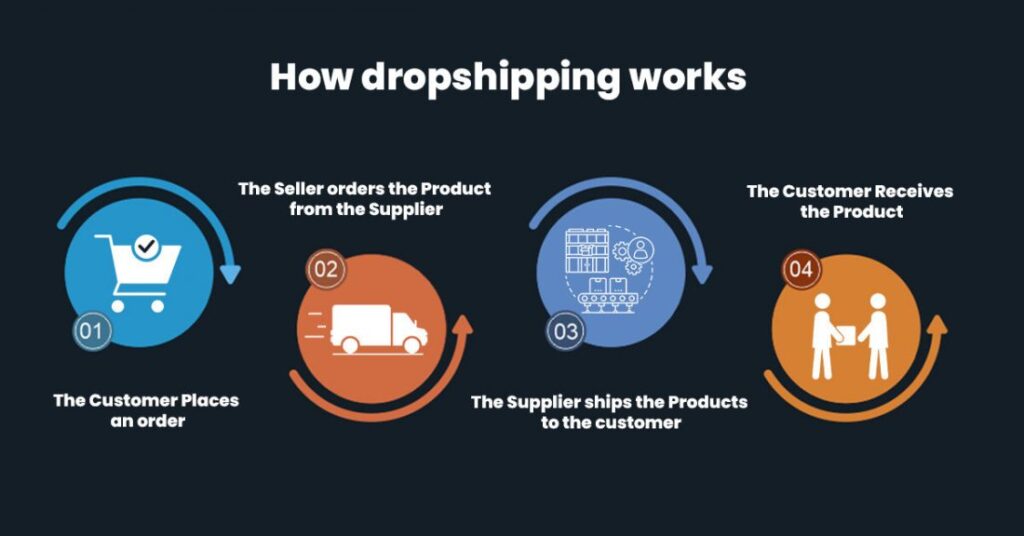
Now that you’ve gained insight into the dynamics of dropshipping on Amazon and its operational aspects, here’s a comprehensive guide on establishing yourself as a dropshipper:
Step 1: Establish an Amazon Seller Account
Initiating sales on Amazon necessitates the possession of an Amazon seller account. This can be obtained through sellercentral.amazon.com, where Amazon presents two options for account types: individual and professional.
Step 2: Identify High-Demand, Low-Competition Products
Identifying viable products for sale on Amazon is pivotal. Utilize tools like Jungle Scout’s Opportunity Finder to uncover products with high demand and low competition. Recommended criteria include monthly unit sales ranging from 100 to 300, low competition settings, average monthly pricing between $20 and $70, and a niche score of 7+ across various categories.
Starting with categories like housewares, sports & outdoors, patio, and home & garden is advisable for beginners due to their manageable nature.
Step 3: Source Amazon Dropshipping Suppliers
After shortlisting potential products, the next step involves sourcing a reliable supplier. Aliexpress is a prominent platform connecting e-commerce entrepreneurs with dropshipping-friendly suppliers. While it offers a wide range of products, be aware that shipping from China might result in extended delivery times, potentially dissuading Amazon shoppers accustomed to swift deliveries.
Consider exploring local suppliers in the US or other regions to ensure faster shipping times and a better customer experience. It’s crucial to procure products directly from suppliers or manufacturers, as purchasing from other retailers violates Amazon’s policies.
When using Aliexpress or any other supplier, ensure beforehand that they do not include their company information on shipped orders, as this contravenes Amazon’s regulations.
Step 4: Craft an Amazon Product Listing
Once you’ve settled on a product and secured a supplier, the subsequent step involves creating an Amazon product listing. Navigate to “Inventory” in your Seller Central account and select “Add a product.” From there, choose “Create a new product listing” and input the necessary details, including the product category and listing information.
While setting the product price, factor in Amazon’s fees. Professional sellers incur referral fees ranging from 8% to 15% based on the category, while individual sellers pay an additional $1.00 per sale.
Refer to Amazon’s Selling on Amazon fee schedule for detailed insights into their fee structure.
Upon completion, you can publish your listing and commence your sales journey on the platform.
Pros and cons of dropshipping
Numerous burgeoning e-commerce entrepreneurs gravitate towards this business model due to its minimal initial capital requirements. However, when contemplating entry into dropshipping, several critical considerations warrant examination. Let’s delineate the advantages and disadvantages:
Pros of Dropshipping
Low Costs: Significantly reduced startup expenses compared to alternative models like private label or wholesale, eschewing the need for bulk product orders entailing substantial upfront expenditure.
Accessible Entry: Facilitates an uncomplicated initiation, enabling swift sourcing of products from a supplier for immediate listing on Amazon or similar platforms.
Amazon’s Permissiveness: Amazon accommodates dropshipping; however, adherence to their established dropship policy remains imperative.
Cons of Dropshipping
Intense Competition: The ease of entry into dropshipping corresponds to heightened competition within the market.
Delayed Deliveries: Potential encounters with extended delivery durations contingent upon the chosen supplier or manufacturer.
Quality Oversight Challenges: Inherent limitations in exercising control over product quality due to direct shipment from the manufacturer or supplier. To mitigate this, procuring samples from suppliers for assessment before formal engagement is advised.
Potential of dropshipping
Potential constraints inherent in dropshipping encompass several facets:
Intense Competition: The accessibility and minimal initial investment of dropshipping contribute to a saturated and fiercely competitive market landscape.
Product Quality Oversight: Involvement in the order fulfillment process is diminished, consequently impeding your ability to oversee and ensure consistent product quality.
Brand Differentiation Challenges: Products sourced through dropshipping may lack distinctiveness, making it arduous to set your offerings apart from similar products available through other sellers.
Narrow Profit Margins: The absence of notable product differentiators often results in heightened price-based competition, potentially eroding profit margins due to competitive pricing strategies.
Fulfillment Limitations: Yielding control over order selection, packaging, and shipment to the dropshipping service compromises your ability to manage the fulfillment timeline.
Inventory Management Constraints: Real-time inventory updates might not be feasible, leading to instances where products listed as available might be out of stock, potentially tarnishing customer experience and brand reputation.
Limited Offer Flexibility: The hands-off nature of order fulfillment might restrict the range of special offers and promotional strategies, such as bundling or free shipping, that you can effectively implement.
Supplier Reliability Concerns: Inadequate dropshippers may manifest errors during order fulfillment, resulting in flawed orders, substandard packaging, or missing items, leading to customer dissatisfaction.
Complex Customer Service Obligations: Despite relinquishing aspects of fulfillment, maintaining a sterling reputation and ensuring customer satisfaction remains your responsibility. Managing customer support becomes crucial, particularly when issues arise during the fulfillment process.
Five tips for success when dropshipping on Amazon
Indeed, establishing a dropshipping venture on Amazon presents a relatively smoother path compared to alternative product selling methods on the platform. Nonetheless, achieving success in dropshipping on Amazon necessitates additional effort. Here are five pointers to aid in your triumph with dropshipping:
Elevate Listing Visibility:
To optimize sales, directing traffic to your product listing is imperative. Utilize various methods, including Amazon’s internal sponsorship program, Pay-Per-Click (PPC), to create targeted product advertisements. Additionally, external strategies such as Facebook ads, social media engagement, blogging, and email marketing can augment visibility, albeit requiring a pre-existing brand following to gain traction.
Prioritize Customer Focus:
While dropshipping streamlines entrepreneurial complexities like manufacturing and shipping, investing in superior customer service becomes paramount. Dedicate your efforts toward ensuring customer satisfaction, as it contributes to positive product reviews, a pivotal factor influencing product success on Amazon.
Emphasize Branding:
Given the limitations in influencing product development or design inherent in dropshipping, focusing on brand establishment becomes crucial. Despite identical products available to competitors, crafting a distinct brand image akin to renowned examples like YETI distinguishes products in the market, highlighting the significance of branding.
Acquire Product Samples:
Before listing products, gaining firsthand experience is crucial. Procure a unit in advance, if possible without disclosing your dropshipping intentions to the supplier. Thoroughly inspect the sample upon arrival to gauge its quality, delivery timeframe, and adherence to product descriptions, aiding in anticipating customer reception.
Diversify Offerings:
Leverage the absence of startup costs in dropshipping to expand product listings extensively. Recognize that while some products may falter, others will thrive. Strategically focus on successful offerings and discontinue less fruitful ones while adhering to Amazon’s guidelines and maintaining organizational focus on Customer Service and Branding strategies (Tips #2 and #3).
Amazon’s dropshipping policy: 2024 updates
Prior to delving into the realm of dropshipping on Amazon, it’s crucial to thoroughly comprehend Amazon’s prescribed policies governing dropshipping. This comprehensive understanding is pivotal to avoid inadvertently violating Amazon’s regulations and to maintain a favorable standing with the platform. for further update click here
Are you ready to start an Amazon dropshipping business?
This piece aims to inspire and energize your journey, whether it involves initiating your inaugural Amazon business or expanding an existing one. For further motivation and comprehensive insights, our State of the Amazon Seller report is a valuable resource at your disposal.
Should you seek additional information or wish to share queries or feedback concerning dropshipping on Amazon, please feel free to engage with us in the comments section below. Your input is highly appreciated!
Related Articles

Google’s innovative strategy for new AI-powered features for education.
Google announced a bunch of new features for classroom management, accessibility, and AI-powered features for creating questions and lesson plans as part of the Bett ed-tech event in the UK.

Free innovative 3D Illustration Animation Character?
Create a 3D illustration of an animated character using Bing Image Creator, an AI-powered tool that generates unique, customizable images from text prompts.

Samsung’s Galaxy S24 line arrives with innovative strategies and generative AI tricks
Samsung’s innovative strategy in a compelling on-stage demonstration at the Unpacked event, Samsung showcased the practical application of this AI technology.