Artificial Intelligence in 2024: Varieties, Current Trends, and its Future?
Want to unlock the true potential of your business?
What Exactly is Artificial Intelligence?
Artificial Intelligence refers to the capability of a computer or robot under digital control to execute tasks typically associated with intelligent beings. It’s characterized as:
1.A Constructed Intelligent Entity
2.Proficient at Performing Tasks Without Explicit Instructions
3.Capable of Reasoning and Behaving in a Rational and Human-like Manner
For most, especially those less acquainted with technology, the immediate association is with robots. They often envision Artificial Intelligence as resembling a figure akin to a terminator, capable of independent thought and action.
Types of Artificial Intelligence
Reactive Models
These AI systems operate without memory or stored data, excelling in specific tasks. For instance, in chess, these machines evaluate moves to make optimal decisions for victory.
Limited Memory Systems
These AI systems retain past data in their memory, enhancing decision-making. However, their memory capacity remains restricted. For instance, using location data, these machines suggest restaurants based on previous inputs.
Theory of Mind
This AI type aims to comprehend emotions and thoughts, facilitating social interaction. However, practical implementations of such machines are yet to emerge.
Self-Aware AI
The forthcoming frontier of AI, these machines are envisioned as intelligent, conscious entities, representing the future evolution of this technology.
How Does Artificial Intelligence Work?
Put simply, AI systems work by merging large with intelligent, iterative processing algorithms. This combination allows AI to learn from patterns and features in the analyzed data. Each time an Artificial Intelligence system performs a round of data processing, it tests and measures its performance and uses the results to develop additional expertise.
Different Certifications in Artificial Intelligence
Fundamentals of Artificial Intelligence Course
The Simplilearn program in Artificial Intelligence fundamentals aims to demystify AI and its business implications. This course offers insights into AI workflows, machine learning, deep learning, and performance evaluation. Participants explore supervised, unsupervised, and reinforcement learning, analyze use cases, and comprehend how clustering and classification algorithms identify AI applications in business.
Machine Learning Certification
Simplilearn’s Machine Learning Course trains individuals in machine learning, an AI subset automating data analysis for computers to learn and adapt without explicit programming. Participants delve into concepts such as supervised and unsupervised learning, mathematical aspects, heuristic approaches, and hands-on modeling, preparing them for roles as Machine Learning Engineers.
Artificial Intelligence Engineer Master’s Program
Simplilearn, in collaboration with IBM, offers a comprehensive AI Master’s program. Participants acquire expertise in Deep Learning, Machine Learning, and requisite programming languages. This training is tailored to kick-start careers in Artificial Intelligence.
Simplilearn’s Artificial Intelligence (AI) Capstone Project
The AI Capstone Project by Simplilearn allows participants to apply their mastered AI skills to solve real industry problems. With guided mentoring, learners tackle various supervised and unsupervised AI techniques like Regression, Multinomial Naïve Bayes, SVM, Tree-based algorithms, and NLP. This project serves as the final showcase of expertise for potential employers.
Career Opportunities in Artificial Intelligence
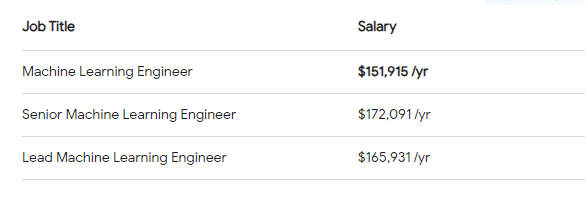
AI & ML Developer/Engineer: Responsible for statistical analysis, implementing designs, and deploying AI solutions using languages like Python, Scala, and Java. Proficiency in frameworks such as Azure ML Studio and Apache Hadoop is essential,
AI Analyst/Specialist: Similar to an AI Engineer, focusing on AI-oriented solutions across industries. Required skills include programming, system analysis, and computational statistics,
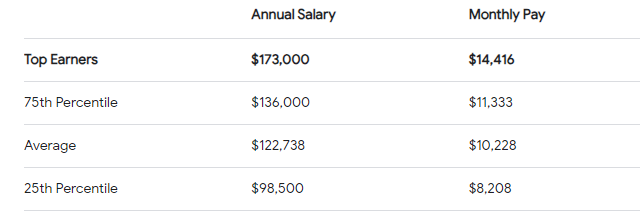
Data Scientist: Involves identifying valuable data sources, analyzing trends, and developing predictive models using tools like SQL, Python, and R. Salaries range
Research Scientist: Innovating AI solutions through in-depth expertise in AI disciplines. Proficiency in programming languages like Python, SAS, and frameworks such as Apache Hadoop is essential.
Product Manager: Strategically uses AI for data interpretation and implementing impactful strategies. Requires proficiency in languages like Python, R, and SQL.
Advantages of Artificial Intelligence (AI)
Reduction in human error
Available 24×7
Helps in repetitive work
Digital assistance
Faster decisions
Rational Decision Maker
Medical applications
Improves Security
Efficient Communication
Disadvantages of Artificial Intelligence (AI)
While Artificial Intelligence (AI) presents a plethora of benefits, its rapid advancement also brings forth several notable disadvantages:
Job Displacement: Automation and AI-driven systems may lead to the displacement of human jobs across various industries, impacting employment opportunities.
Algorithmic Bias: AI algorithms can perpetuate biases present in training data, leading to discriminatory outcomes in decision-making processes.
Privacy Concerns: The collection and analysis of vast amounts of personal data for AI applications raise concerns about data privacy and security breaches.
Reliance on Technology: Overreliance on AI systems may lead to a decline in human critical thinking and decision-making skills.
Ethical Dilemmas: AI raises ethical dilemmas in areas like autonomous weapons, where decisions made by AI could have profound ethical implications.
High Initial Costs: Implementing AI technologies can require significant initial investments, making them inaccessible to smaller businesses or less affluent economies.
The Seven Primary Domains of AI
Machine Learning: Algorithms enabling machines to learn from data and enhance performance without explicit programming.
Natural Language Processing (NLP): Focuses on enabling computers to understand, interpret, and generate human language.
Computer Vision: Involves granting machines the ability to interpret visual information from images or videos.
Robotics: Merging AI with mechanical engineering to create autonomous machines capable of task execution.
Expert Systems: Utilizes knowledge and reasoning to solve intricate problems in specific domains, mirroring human expertise.
Speech Recognition: Converts spoken language into text or commands, facilitating machine-user interaction via speech.
Planning and Decision Making: Focuses on algorithms enabling AI systems to make decisions and optimize actions toward predefined objectives.

13 Examples of Artificial Intelligence
Facebook Watch
Facebook Friends Recommendations
Siri, Alexa and other smart assistants
Self-driving cars
Robo-advisors
Conversational bots
Email spam filters
Netflix’s recommendations
Proactive healthcare management
Disease mapping
Automated financial investing
Virtual travel booking agent
Social media monitoring
Related Articles

Google’s innovative strategy for new AI-powered features for education.
Google announced a bunch of new features for classroom management, accessibility, and AI-powered features for creating questions and lesson plans as part of the Bett ed-tech event in the UK.

Free innovative 3D Illustration Animation Character?
Create a 3D illustration of an animated character using Bing Image Creator, an AI-powered tool that generates unique, customizable images from text prompts.

Samsung’s Galaxy S24 line arrives with innovative strategies and generative AI tricks
Samsung’s innovative strategy in a compelling on-stage demonstration at the Unpacked event, Samsung showcased the practical application of this AI technology.